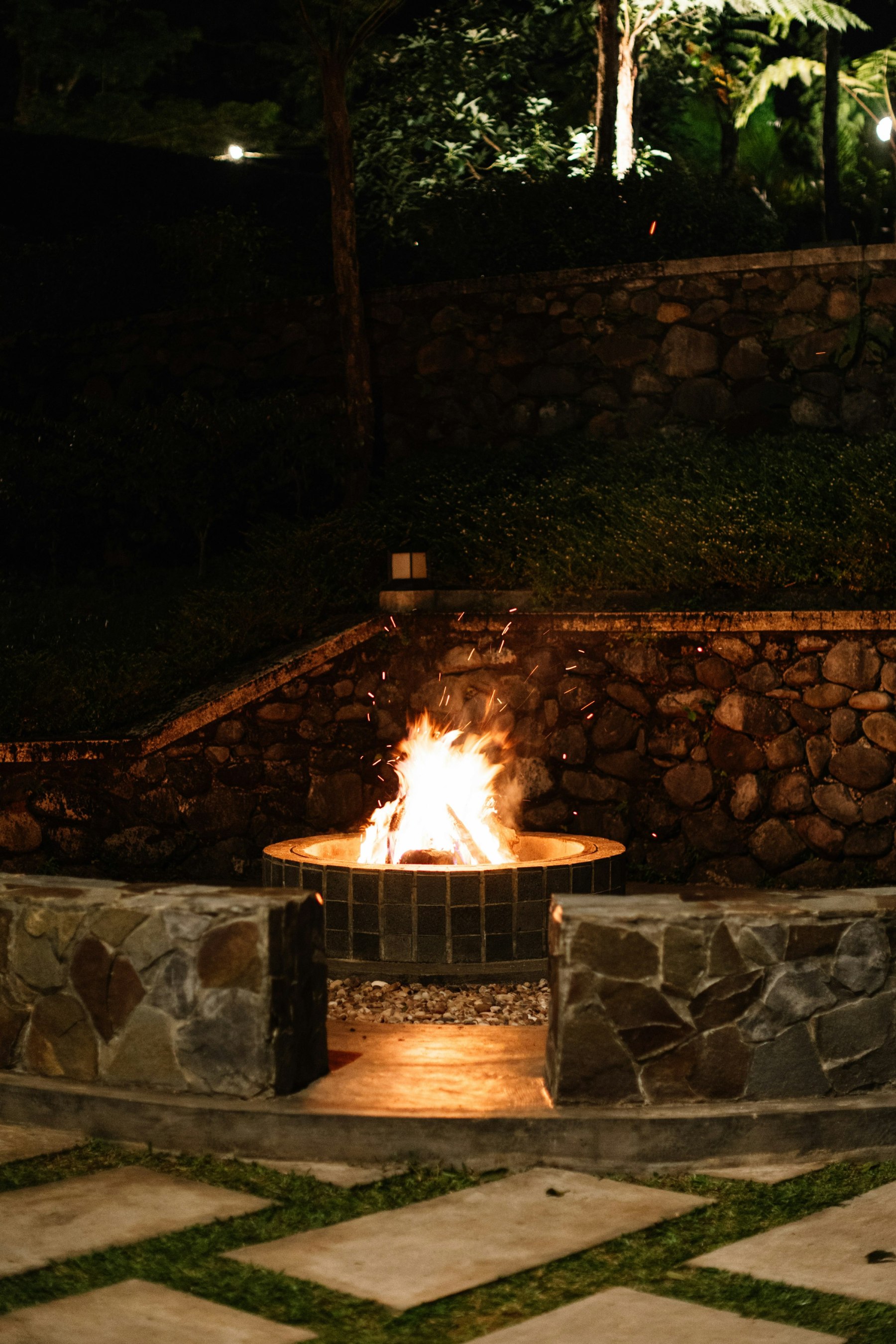
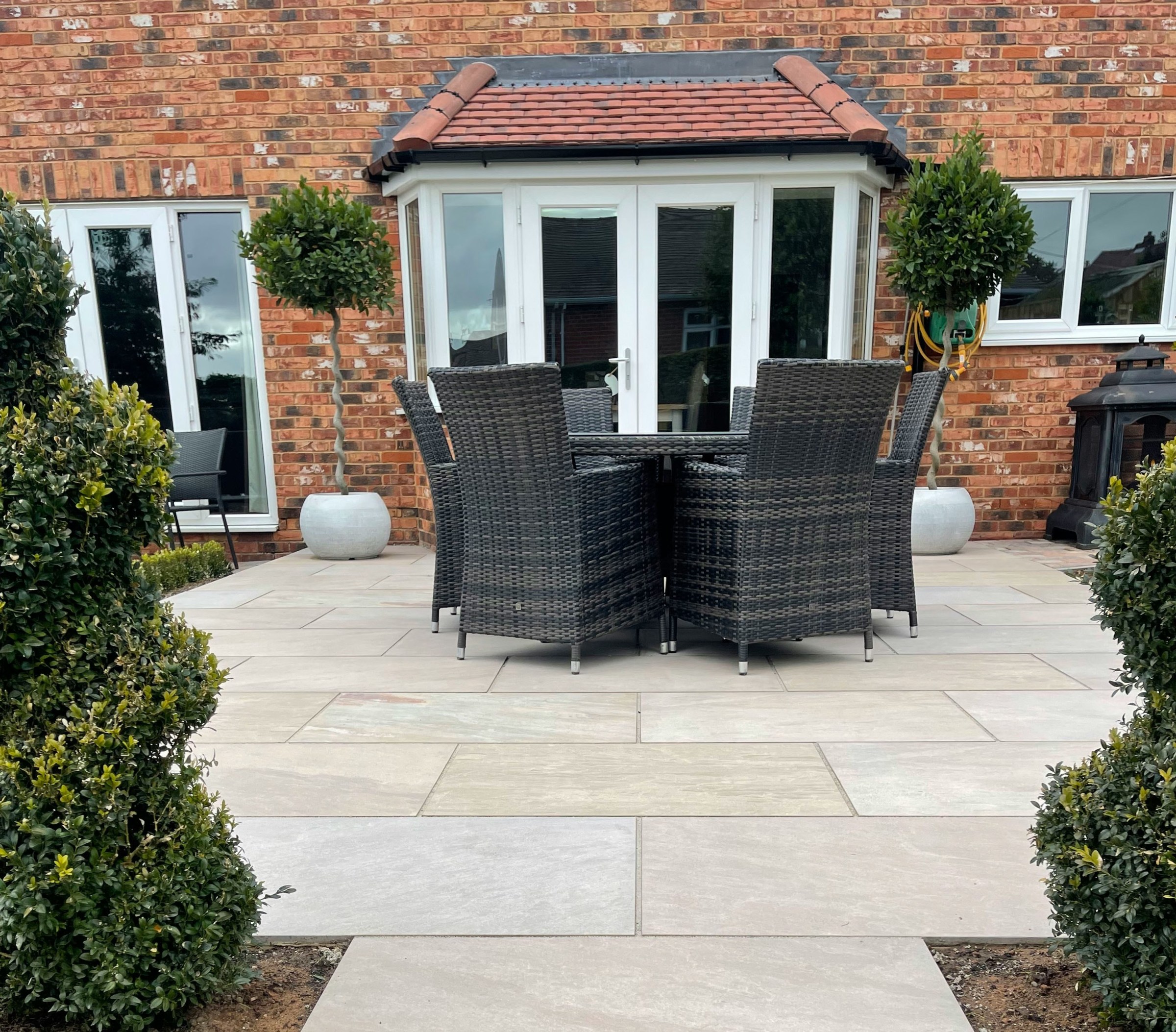
Most patio projects we quote in Barrie come down to three materials: interlocking pavers, poured concrete and natural stone. All three can make a great patio. They look different, they’re repaired differently, and they handle our winters in different ways. Here’s the plain-language comparison we walk people through on a site visit.
Quick comparison
| Interlock pavers | Poured concrete | Natural stone | |
|---|---|---|---|
| Look | Wide range of colours, sizes and patterns | Clean and simple; finish and edges can vary | One-of-a-kind, natural texture and colour |
| Repairs | Sections can be lifted and relaid | Cracks and settlement are hard to patch invisibly | Individual stones can often be reset |
| Movement | Joints let it flex with the ground | One rigid slab; control joints guide cracking | Depends on how it’s laid |
| Upkeep | Occasional re-sanding and weed control | Sealing is common; watch for salt damage | Varies by stone; some need sealing |
| Base | Compacted granular base | Compacted granular base plus reinforcement | Compacted granular base (or concrete for some styles) |
Based on our own installation experience.
Interlocking pavers
Interlock is the most common choice around here for good reason. Pavers are made to consistent sizes, come in a huge range of styles, and — most importantly in our climate — the joints let the surface flex slightly as the ground moves. If one area settles, it can be lifted, re-based and relaid with the same pavers, and the repair disappears.
The trade-off is maintenance. Joints need to stay full of polymeric sand, and weeds will find any gap you leave them. That’s a short job every few years, not a rebuild.
Good fit if: you want flexibility in design, easy repairs and a surface that tolerates freeze–thaw well.
Poured concrete
A concrete patio is one continuous slab. Done well — on a compacted base, with reinforcement, a proper slope and control joints cut in the right places — it gives you a clean, modern surface without joints to weed.
The catch is that concrete is rigid. If the ground under it moves, it cracks, and patching a crack so it disappears is difficult. New concrete is also sensitive to de-icing salts, so how the surface is treated in its first winter matters.
Good fit if: you like a simple, joint-free look and the site drains well. See how we build them on our concrete page.
Natural stone
Flagstone, slab and other natural stone give you texture and colour that manufactured products can’t fully copy. No two patios look the same. Stone is heavy and durable, and individual pieces can often be lifted and reset.
Natural stone is usually the most labour-intensive to install, because every piece is different and has to be fitted. Some stones are more porous than others, which affects how they handle water, salt and staining.
Good fit if: you want a natural, one-of-a-kind look and you’re happy to invest in it.
What matters more than the surface
Whichever you choose, the surface is only as good as the base under it. A beautiful stone patio on a thin base will sink just like interlock on a thin base. We cover what that base should look like in how deep should a patio base be?
Mixing materials
Some of the best-looking yards combine materials: an interlock patio with a natural stone step, or a concrete pad with a paver border. If you’re stuck between two options, that’s often the answer.
Want to talk it through on site? We’ll bring samples, look at how the yard drains and give you a clear, written quote — free and with no obligation. More on our patios page.